

Finding the right speech therapist for a child with autism is an important step towards supporting their communication, self-expression, and everyday interactions.
Some autistic children may have difficulty expressing their needs through spoken language. Others may speak fluently but find conversations, social communication, or understanding language challenging. Some children may communicate through gestures, facial expressions, pictures, or assistive communication devices.
This is why speech therapy for autism should never follow a one-size-fits-all approach.
A good speech therapist understands that communication is much more than speaking. They recognise each child’s individual strengths, preferences, developmental needs, and communication style, and create a personalised therapy plan that helps the child communicate more effectively in everyday life.
According to the American Speech-Language-Hearing Association (ASHA), speech-language pathologists play an important role in assessing and supporting communication needs in autistic individuals, including spoken language, social communication, and augmentative and alternative communication (AAC).
So, what should parents look for when choosing a speech therapist for autism?
Let’s explore the essential qualities, qualifications, and therapy practices that can make a meaningful difference in a child’s communication journey.
What Makes a Good Speech Therapist for Autism?
A good speech therapist for autism is a qualified professional who understands autistic communication, conducts individualised assessments, uses evidence-informed strategies, supports different communication methods, and works closely with families to develop functional communication skills.
The therapist should focus on helping the child express needs, thoughts, feelings, and preferences in ways that work for them, rather than simply encouraging speech or making the child appear less autistic.
Here are the key qualities parents should look for:
-
Relevant qualifications and experience in paediatric speech and language therapy.
-
A personalised, child-centred approach to assessment and treatment.
-
Expertise in receptive, expressive, and social communication.
-
Knowledge of Augmentative and Alternative Communication (AAC).
-
Patience, flexibility, and an understanding of sensory and developmental needs.
-
Strong parent collaboration and practical home-based strategies.
-
Clear, meaningful goals and regular progress reviews.
-
A collaborative approach with other professionals when needed.
Each of these qualities plays a role in making speech therapy more relevant to a child’s everyday life.
Relevant Qualifications and Experience in Autism
The first thing to consider when choosing a speech therapist for autism is their professional training and experience.
A qualified speech-language pathologist (SLP), also called a speech and language therapist (SLT), has specialised training in communication development, language difficulties, speech production, and related areas.
However, working with autistic children requires additional understanding of neurodevelopment, different communication styles, sensory needs, and individual learning differences.
What qualifications should a speech therapist have?
Parents should look for a professional who:
-
Holds a recognised qualification in speech-language pathology or speech and language therapy.
-
Has experience working with children with autism and other developmental communication differences.
-
Understands child development, language acquisition, and communication assessment.
-
Has relevant training in AAC and alternative communication methods.
-
Participates in continuing professional development and follows evidence-informed practices.
In India, parents can also check whether the professional’s qualification and registration requirements are appropriate for their role, including applicable Rehabilitation Council of India (RCI) requirements.
Experience matters because autistic children can have very different communication profiles. A therapist who understands these differences is better positioned to identify the child’s needs and select suitable strategies.
2. A Personalised and Child-Centred Approach
Every autistic child communicates differently.
One child may use single words to request things. Another may communicate through gestures, pictures, or a speech-generating device. Some children may speak in sentences but need support with conversation, comprehension, or expressing emotions.
A good speech therapist recognises these differences and develops a therapy plan around the child’s individual communication profile.
What does personalised speech therapy look like?
A child-centred approach may include:
-
Assessing the child’s current communication abilities and strengths.
-
Identifying how the child expresses needs, preferences, and feelings.
-
Understanding the child’s interests, sensory preferences, and developmental level.
-
Setting goals that are relevant to the child’s daily life.
-
Adapting activities and strategies based on the child’s responses.
-
Reviewing and updating the therapy plan as the child develops.
For example, if a child struggles to ask for help, the therapist may work on ways to communicate “help me” using speech, gestures, signs, or pictures.
The aim is not to make every child communicate in the same way. It is to help each child develop effective, meaningful ways to communicate.
3. Expertise in Receptive, Expressive, and Social Communication
A good speech therapist understands that communication involves several interconnected skills.
Speech therapy for autism may focus on three broad areas: receptive language, expressive language, and social communication.
Receptive language
Receptive language refers to understanding words, instructions, questions, and other forms of communication.
A child who has difficulty with receptive language may struggle to:
-
Follow simple or multi-step instructions.
-
Understand questions.
-
Identify objects, actions, or people when named.
-
Understand words used in everyday routines.
A therapist may use visual supports, gestures, repetition, play-based activities, and other strategies to support understanding.
Expressive language
Expressive language is the ability to communicate thoughts, needs, ideas, and feelings.
Some children may have difficulty:
-
Using words to request things.
-
Combining words into sentences.
-
Answering questions.
-
Describing experiences.
-
Communicating discomfort or asking for help.
A therapist can support expressive communication through language modelling, meaningful play, structured activities, and alternative communication methods where appropriate.
Social communication
Social communication involves using and understanding communication in interactions with others.
This may include:
-
Taking turns in a conversation or activity.
-
Initiating interactions.
-
Understanding conversational cues.
-
Sharing information and interests.
-
Communicating with peers and familiar adults.
Social communication support should respect the child’s personality and communication preferences. The goal is meaningful interaction and connection, not forcing eye contact or making the child imitate behaviours that are not necessary for communication.
4. Knowledge of Augmentative and Alternative Communication (AAC)
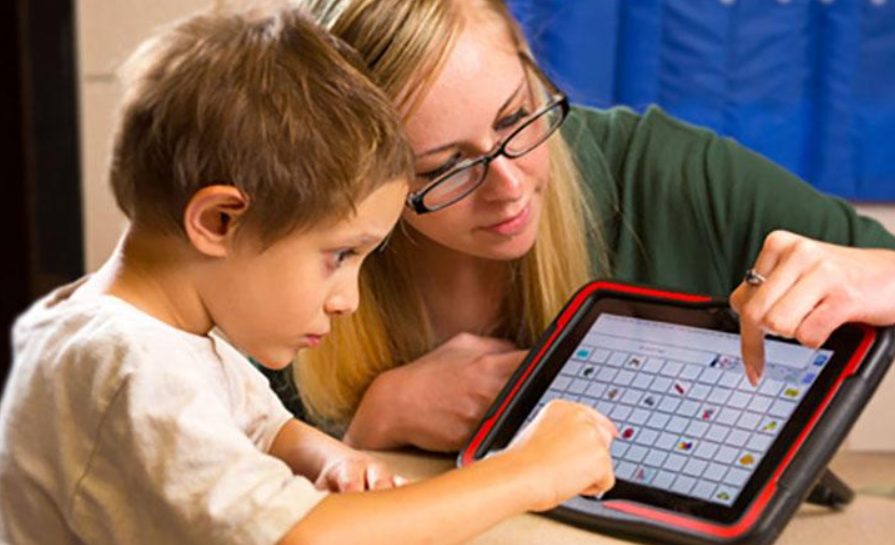
One of the most important qualities of a good speech therapist for autism is an understanding of Augmentative and Alternative Communication (AAC).
AAC refers to communication methods that supplement or provide an alternative to spoken language.
It can be particularly useful for children who are non-speaking, minimally speaking, or unable to communicate all their needs through speech alone.
What are the different types of AAC?
AAC can include low-tech and high-tech communication tools.
|
Type of AAC |
Examples |
|---|---|
|
Gestures and signs |
Pointing, waving, simple signs |
|
Picture-based communication |
Picture cards, communication boards |
|
Symbol-based systems |
Picture symbols representing words and concepts |
|
Speech-generating devices |
Devices that produce spoken messages |
|
Communication apps |
Apps that allow children to select symbols or words |
A good therapist assesses whether AAC could help the child communicate more effectively and supports the child and family in learning how to use it.
Importantly, AAC does not have to be a last resort after speech therapy has failed. AAC is recommended as early as possible when communication needs are not being met, with no prerequisite skills required for access.
AAC can support communication alongside spoken language development. The goal is to ensure that the child has a reliable way to express themselves.
5. Patience, Flexibility, and Understanding of Sensory Needs
A good speech therapist understands that communication and learning can look different for every autistic child.
Some children may need additional time to process language. Others may communicate more comfortably through movement, visual supports, or activities connected to their interests.
A therapist who is patient and flexible can adapt sessions to help the child feel comfortable and engaged.
What should parents look for?
A supportive therapist should:
-
Give the child sufficient time to respond without unnecessary pressure.
-
Recognise gestures, sounds, facial expressions, and other communication attempts.
-
Adapt activities to the child’s interests and developmental level.
-
Consider sensory factors such as noise, lighting, movement, and touch.
-
Allow breaks when needed and adjust the pace of activities.
-
Respect the child’s boundaries and communication preferences.
For example, a child who enjoys cars may be more motivated to practise requesting, naming, or describing objects through a car-based play activity than through repetitive flashcards.
A flexible therapist uses the child’s interests as opportunities for meaningful communication.
6. Strong Parent Collaboration and Practical Home-Based Strategies

Parents and caregivers are an important part of a child’s communication environment.
A good speech therapist does not limit communication support to the therapy room. They help families understand their child’s communication style and provide practical strategies that can be used during everyday activities.
How can parents support communication at home?
A therapist may encourage parents to:
-
Use simple, clear language during daily activities.
-
Follow the child’s interests during play.
-
Respond to gestures, sounds, words, and other communication attempts.
-
Create opportunities for the child to make choices.
-
Use pictures, signs, or AAC when appropriate.
-
Pause and allow time for the child to respond.
-
Incorporate communication practice into meals, playtime, and daily routines.
For example, during snack time, a parent might offer two choices and encourage the child to indicate their preference through speech, pointing, or a picture.
The focus should be on creating natural opportunities for communication, not turning every interaction into a formal lesson.
7. Clear Goals and Meaningful Progress Tracking
Speech therapy should have clear goals that reflect the child’s individual needs and priorities.
A good speech therapist explains what the therapy is working towards, how progress will be observed, and when the plan may need to change.
What are meaningful speech therapy goals for autism?
Goals may include helping a child:
-
Communicate basic needs and preferences.
-
Request help or ask for a break.
-
Understand everyday instructions.
-
Express feelings and discomfort.
-
Participate in play and social interactions.
-
Use words, gestures, pictures, or AAC more independently.
-
Develop conversational skills relevant to their daily life.
For example, instead of focusing only on how many new words a child can say, a therapist might track whether the child can independently communicate a need during a familiar activity.
Progress can be measured through observations, communication samples, caregiver feedback, and other appropriate assessment methods.
What should parents expect during progress reviews?
Parents should receive clear explanations of:
-
The child’s current communication strengths and support needs.
-
The goals being addressed in therapy.
-
The progress observed over time.
-
Strategies that are working and those that may need adjustment.
-
The next steps in the therapy plan.
Progress may look different for every child. Meaningful improvements can include more independent communication, greater participation, or an increased ability to express needs and preferences.
8. A Collaborative Approach with Other Professionals

Autism can involve different developmental, communication, sensory, and functional support needs.
Depending on the child’s individual profile, speech therapy may be one part of a broader support plan involving professionals such as occupational therapists, developmental specialists, psychologists, educators, and other relevant clinicians.
A good speech therapist understands when collaboration or referral may be helpful.
Why is collaboration important?
A multidisciplinary approach can help professionals:
-
Share relevant information about the child’s communication needs.
-
Coordinate strategies used at home, in therapy, and at school.
-
Identify sensory or environmental factors that affect communication.
-
Support the use of AAC across different settings.
-
Address related concerns that may affect participation in therapy.
For example, a speech therapist may work with an occupational therapist to understand how sensory preferences affect a child’s participation in communication activities.
The aim is to ensure that different forms of support complement one another while keeping the child’s individual needs at the centre.
9. A Neurodiversity-Affirming Approach to Speech Therapy
A good speech therapist respects autism as part of the child’s identity and recognises that communication does not have to look the same for everyone.
Neurodiversity-affirming speech therapy focuses on meaningful communication, autonomy, participation, and the child’s individual strengths.
This approach does not mean avoiding therapy or developmental support. It means choosing goals that improve the child’s ability to communicate and participate without trying to eliminate harmless autistic traits.
What does neurodiversity-affirming speech therapy look like?
It may involve:
-
Respecting different communication styles.
-
Supporting the child’s ability to say “yes,” “no,” “stop,” and “help.”
-
Accepting AAC and other communication methods.
-
Recognising the child’s interests and strengths.
-
Supporting self-advocacy and personal boundaries.
-
Focusing on communication skills that improve everyday participation.
For example, a therapist may help a child communicate discomfort in a noisy environment rather than expecting the child to tolerate the noise without expressing their needs.
The focus is on supporting communication, not forcing conformity.
10. Ability to Adapt Therapy to Different Developmental Stages
A child’s communication needs can change over time.
A toddler who is beginning to communicate may need support with requesting, understanding words, and developing early communication skills. A school-aged child may need help with conversations, expressing opinions, or communicating with peers.
A good speech therapist adapts therapy to the child’s developmental stage and changing priorities.
Examples of therapy goals by developmental stage
|
Developmental stage |
Possible communication goals |
|---|---|
|
Toddlers and preschoolers |
Joint engagement, requesting, early language, gestures, and AAC |
|
School-aged children |
Understanding instructions, expressing ideas, functional language, and peer interactions |
|
Older children and adolescents |
Self-advocacy, conversational skills, expressing preferences, and communication across settings |
These are examples, not fixed milestones or expectations. A child’s goals should be based on their individual communication profile rather than age alone.
How to Choose the Right Speech Therapist for Autism: A Parent’s Checklist
Choosing a speech therapist can feel overwhelming, especially when parents are comparing different therapy centres and approaches.
Use this checklist to help you evaluate whether a therapist is a suitable fit for your child.
[ ] Does the therapist have recognised qualifications in speech and language therapy?
[ ] Do they have experience working with autistic children?
[ ] Do they conduct an individualised communication assessment?
[ ] Do they support spoken language, gestures, and AAC where appropriate?
[ ] Do they respect the child’s sensory needs and communication preferences?
[ ] Do they involve parents in setting goals and planning therapy?
[ ] Do they explain how progress will be measured and reviewed?
[ ] Do they coordinate with other professionals when needed?
[ ] Do they focus on functional communication and the child’s individual priorities?
[ ] Do they explain the therapy approach, expected goals, and fees clearly?
Frequently Asked Questions (FAQs)
1. What makes a good speech therapist for autism?
A good speech therapist for autism has recognised professional qualifications, experience working with autistic children, and the ability to create personalised therapy plans. They understand different communication styles, support AAC where appropriate, involve parents, and focus on meaningful communication goals.
2. How do I choose a speech therapist for my autistic child?
Look for a qualified speech-language pathologist with experience in autism and paediatric communication. Ask about their assessment process, therapy methods, AAC expertise, parent involvement, and progress tracking. Choose someone who respects your child’s communication preferences and develops goals based on individual needs.
3. Can speech therapy help a non-speaking autistic child?
Yes. Speech therapy can support non-speaking autistic children by developing functional communication through gestures, signs, picture-based systems, and AAC devices. Therapy can also support spoken language development when appropriate. The goal is to ensure the child has effective ways to express needs, preferences, and feelings.
4. Does speech therapy help autistic children talk?
Speech therapy may help some autistic children develop spoken language, expand vocabulary, and use words more effectively. However, outcomes vary from child to child. Speech therapy can also support communication through non-speaking methods, including AAC, without making spoken language a requirement for successful communication.
5. What is AAC in autism speech therapy?
Augmentative and Alternative Communication (AAC) includes methods and tools that supplement or replace spoken communication. Examples include gestures, signs, picture boards, communication apps, and speech-generating devices. AAC can help autistic children communicate their needs and ideas when spoken language alone is not sufficient.
6. At what age should an autistic child start speech therapy?
Speech and language support can begin as soon as communication concerns are identified and an assessment indicates that support may be helpful. There is no need to wait for a child to reach a particular age or begin speaking. The appropriate timing and approach depend on the child’s individual needs.
7. How often should an autistic child attend speech therapy?
The frequency of speech therapy depends on the child’s communication needs, goals, developmental profile, and response to intervention. Some children may benefit from more frequent sessions, while others may need a different schedule. A qualified therapist can recommend an individualised plan and review it over time.
8. What is the difference between a speech therapist and a speech-language pathologist?
Speech therapist, speech and language therapist, and speech-language pathologist are terms used for professionals who assess and support speech, language, and communication needs. The exact professional title and registration requirements vary by country. Parents should verify the therapist’s recognised qualifications and relevant experience.
9. What should parents expect in the first speech therapy session?
The first session typically involves discussing the child’s developmental and communication history, observing how the child communicates, identifying strengths and challenges, and discussing family priorities. Depending on the child’s needs, the therapist may recommend further assessment before developing an individualised therapy plan.
10. Can speech therapy be combined with occupational therapy and ABA therapy?
Speech therapy may be combined with occupational therapy, ABA-based services, or other developmental supports when these are appropriate for the child’s individual needs. Coordination between professionals can help maintain consistent communication strategies across settings. Each service should have clearly defined goals that respect the child’s needs and preferences.
Speech Therapy for Autism at Early Autism Ventures

We at Early Autism Ventures (EAV), understand that every child has a unique way of communicating and learning.
Our speech and language therapy services focus on supporting children’s communication development through individualised strategies that address their specific needs.
How our speech therapy can support your child
Our speech therapy services focus on areas such as:
-
Receptive and expressive language development.
-
Functional communication and everyday interactions.
-
Social communication and play skills.
-
Speech clarity, articulation, and phonological awareness.
-
Oral-motor skills and feeding-related support where appropriate.
-
AAC and alternative communication methods when needed.
Our approach considers the child’s overall development, including sensory and communication needs, to help create meaningful opportunities for learning and interaction.
Where can you find Early Autism Ventures?
Early Autism Ventures provides therapy services in Bengaluru, Hyderabad, and Vijayawada, with centre-based and other service options depending on location and availability.
To learn more about our speech and language therapy services, visit:
You can also explore our website to learn more about our therapy programs and locations.
Give your child the support they need to communicate
Every child’s communication journey is different. With the right assessment, personalised support, and collaboration between therapists and families, children can develop ways to express themselves that are meaningful to them.
If you have concerns about your child’s communication development, consider consulting a qualified speech and language therapist to understand their individual needs and explore appropriate support.

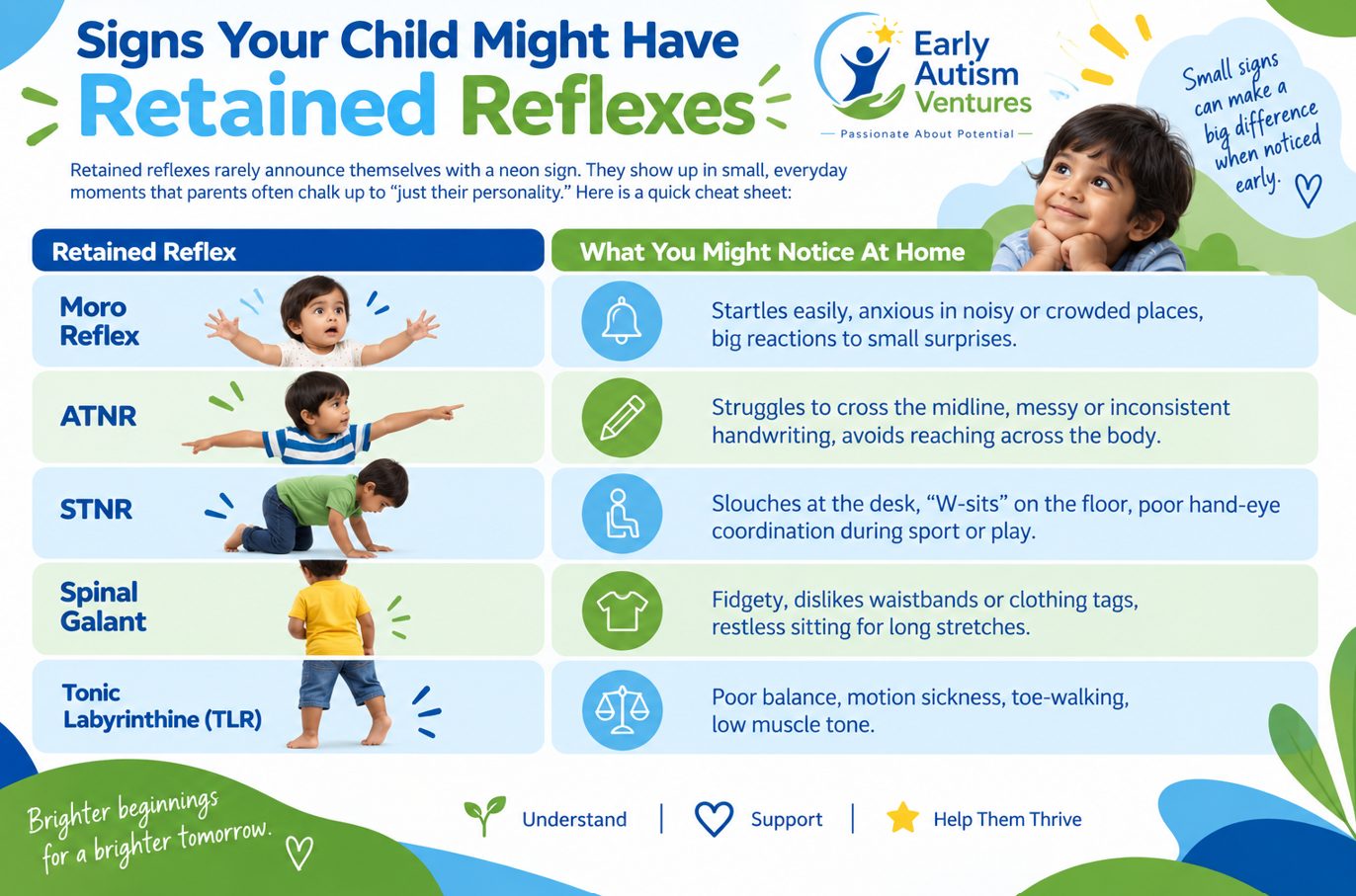 Retained reflexes rarely announce themselves with a neon sign. They show up in small, everyday moments that parents often chalk up to “just their personality.” Here is a quick cheat sheet:





Recent Comments