";}
Monthly Archives

Is my Child Ready for School

Is My Child Ready for School? How ABA Therapy Builds the Skills That Matter Most

By | Blog | No Comments

Every parent has imagined it: backpack on, water bottle in hand, their child walking confidently through the school gates on the first day. For parents of children with autism, ADHD, developmental delays, or sensory processing challenges, that image can feel exciting, and a little terrifying at the same time.

“Is my child ready?” is one of the most common questions we hear at Early Autism Ventures (EAV). And here’s our honest answer: school readiness isn’t a single milestone but a collection of skills, independence, social communication, emotional regulation, group participation, and smooth transitions that children can absolutely learn and practice with the right support.

That’s exactly what ABA therapy is designed to do.

What Does “School Ready” Actually Mean?

Before we talk about how to get there, let’s talk about what “school ready” looks like. Teachers will tell you that a child doesn’t need to read or count to attend school. What they do need are the behavioural and functional skills to participate meaningfully in a classroom:

  • Following multi-step instructions from an adult
  • Tolerating group settings, noise, proximity to peers, and unpredictable routines
  • Waiting and turn-taking without meltdowns (honestly, this one is hard for adults, too)
  • Basic self-care, toileting, eating independently, managing belongings (ADL training)
  • Communicating needs, verbally or through AAC
  • Transitioning between activities without distress
  • Engaging with peers in simple play and group tasks

If your child is working on any of these areas right now, you are not behind. You are exactly where this work begins.

How Does ABA Therapy Work for School Readiness?

How does ABA therapy work with School Readiness

ABA therapy (Applied Behavior Analysis) is the most rigorously researched, evidence-based intervention available for children on the autism spectrum and those with neurodevelopmental differences. Research published in Cureus (2024) tracked 98 children with autism receiving ABA intervention and found statistically significant improvement in target behaviours across all participants over just one month of treatment.

 So how does it actually work?

ABA therapy is built on understanding why a behaviour happens and using that understanding to teach new, more functional skills. It isn’t about suppressing who your child is, it’s about giving them more tools to navigate the world. At the heart of autism ABA therapy is a principle you’ve probably heard of: positive reinforcement. 

When a child performs a target skill (say, sitting in a circle for 2 minutes), that behaviour is immediately followed by something valuable  to them, a high five, their favourite song, a small treat, or enthusiastic praise. Over time, the behaviour strengthens. That’s the science of positive reinforcement in action.

But ABA therapy also uses positive and negative reinforcement in ABA therapy strategically. Negative reinforcement, often misunderstood, doesn’t mean punishment. It means removing something unpleasant when a desired behaviour occurs (like ending a difficult task after the child completes it calmly). Together, positive and negative reinforcement ABA therapy creates a motivating, supportive environment where children genuinely want to engage.

Take the first step. Schedule a Free Consultation with EAV right away.

The BCBA/QBA/IBA (qualified supervisor: Your Child’s Strategic Partner

Every child at EAV is assessed and guided by a BCBA (Board Certified Behavior Analyst), a highly trained professional who holds one of the most specialised credentials in the field of child development therapy.

Your BCBA / QBA / IBA doesn’t just run sessions. They:

– Conduct a detailed OT assessment for children and a behavioural assessment at intake

– Create an individualised treatment plan targeting your child’s specific school readiness goals

– Analyse data continuously, a process called ABA progress monitoring, to adjust goals in real time

– Collaborate with parents through an OT home program for kids, so learning continues beyond the therapy room

– Liaise with teachers and schools to ensure a smooth inclusion plan

Think of your BCBA as the architect, and every session as another brick in the foundation.

Goal Areas That Build School Readiness

Here’s where it gets practical. Let’s walk through the specific skill domains a BCBA (Board Certified Behavior Analyst) will typically target for school inclusion: 

  1. Independence Skills (ADL Training)

 Independent living skills are non-negotiable for school. We’re talking about toileting, managing a school bag, opening a lunchbox, and washing hands. ADL training (Activities of Daily Living) is a cornerstone of occupational therapy for kids and is deeply integrated into our ABA programming at EAV. When a child can manage their own body and belongings, their confidence, and their teacher’s, skyrockets.

  1. Social Skills

Autism ABA therapy is particularly powerful for social skill development. From making eye contact and greeting a peer to sharing materials and asking for help, social competence is built skill-by-skill through structured practice and positive reinforcement. A 2024 study established that ABA programming significantly improves social and communicative skills in children with ASD. Your child can learn to connect; they may just need a different roadmap to get there.

  1. Group Skills

Classrooms are group environments, loud, unpredictable, and full of other kids who also want the blue crayon. Group participation skills include: sitting at a table with others, following group instructions, not calling out, and tolerating proximity. These are actively practiced in our small-group therapy sessions at EAV, where children build behavioural and sensory regulation in a structured, supportive setting.

  1. Transition Skills

One of the most common barriers to school entry isn’t academics, it’s transitions. Moving from home to school, from play to work, from lunch to class, each shift can trigger big emotions. ABA therapy teaches transition skills using visual schedules, first-then boards, and systematic desensitisation, all carefully designed by your child’s BCBA.

Early intervention therapy is especially effective here. The earlier these skills are introduced, the more naturally they become part of a child’s routine.

  1. Communication Skills

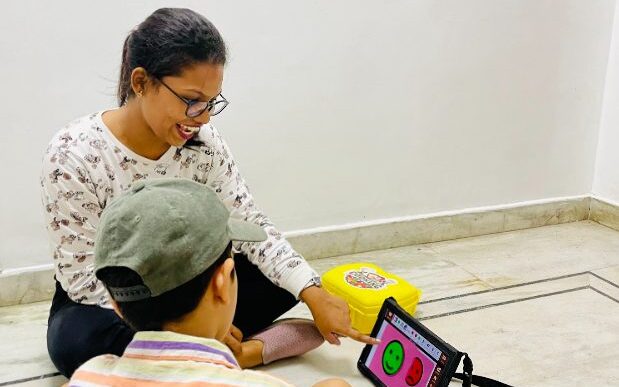
Whether your child uses verbal speech, AAC (Augmentative and Alternative Communication), or PECS, speech therapy and ABA work hand-in-hand at EAV to build functional communication. Requesting help. Saying “no” appropriately. Describing a need. These aren’t small things but  the building blocks of classroom participation.

Arjun (name changed) came to EAV at age 4 with a diagnosis of autism and significant sensory sensitivities. Loud environments would trigger meltdowns lasting 20–30 minutes. He had no peer interaction and could not follow more than a one-step instruction. His parents’ dream, that he’d start school with his age group, felt very far away.

Over 18 months of autism ABA therapy at EAV, guided by his dedicated BCBA (Board Certified Behavior Analyst), Arjun’s programme targeted sensory desensitisation, group tolerance, ADL training, and transition readiness. Positive reinforcement was built around his love of trains (his therapists became very well-informed about locomotives, naturally). We also integrated occupational therapy for kids to address his fine motor skills and sensory processing disorder therapy to reduce environmental overwhelm.

By the time he turned 5, Arjun could sit in a group of 6 children for 20 minutes, follow two-step instructions, manage his own bag and snacks, and greet peers by name. He started mainstream school that June, with a support plan and a smile.

Arjun’s mum told us: “I used to watch other children go to school and quietly cry. Now I’m the one standing at the gate, crying happy tears.” 

We’re not crying. You’re crying. (We’re totally crying.)

Is your child working toward school readiness? Let’s build a plan together. Schedule a Free Consultation with EAV.

ABA Progress Monitoring: How Do We Know It’s Working?

A crucial feature of quality ABA therapy, and one that sets EAV apart, is rigorous ABA progress monitoring. Every session generates data. Your child’s BCBA/QBA/IBA reviews that data weekly (sometimes daily) to assess ABA therapy progress, identify what’s working, and pivot what isn’t.

This isn’t just good practice. It’s the ethical foundation of the field. Research consistently shows that ABA therapy progress is best achieved through continuous data collection and evidence-based decision-making.

At EAV, our support doesn’t stop at the therapy room door. We offer free parent training sessions, because when parents understand the why behind the therapy, the how at home becomes so much more powerful. Our sessions also include structured observations at every level. Through this, parents observe their child’s progress firsthand, supervisors observe therapists to maintain the highest clinical standards, and our team observes each child continuously to keep therapy sharp and responsive. 

And when your child needs support in their natural environment? We do free home visits, as well. Because let’s be honest: sometimes, the best therapy happens where life actually does.

Research shows that ABA therapy is used by approximately 64% of autistic individuals, and children who receive autism ABA therapy before age four show significant improvements in social skills and communication, with around 50% making notable advances in these areas. 

ABA Therapy Benefits: A Quick Summary for Busy Parents

Because we know you’re reading this at 11 pm while your child finally sleeps, here’s the short version of ABA therapy benefits for school readiness:


Skill Area              How ABA Helps                                 
Independence (ADL) Teaches step-by-step self-care routines           
Social skills           Builds peer interaction, greetings, and sharing       
Group behaviour         Practices classroom routines in structured settings
Communication           Pairs with speech therapy for functional language 
Sensory regulation      Integrates OT and sensory integration therapy 
Transition skills       Visual supports, desensitisation, predictability  
ABA therapy progress Tracked regularly by your BCBA                    

The ABA therapy benefits extend far beyond the therapy room, into playgrounds, kitchens, classrooms, and futures.

Every child deserves a shot at the classroom experience. Let EAV show you how. Book Your Free Consultation Today

How Early Autism Ventures (EAV) Can Help Your Child

EAV is Hyderabad’s dedicated centre for child development therapy, located in Madhapur. We offer:

  • ABA therapy delivered by certified BCBAs/QBAs/IBAs
  • Pediatric occupational therapy, including sensory integration therapy, gross motor skills therapy, and fine motor skills activities
  • Speech therapy and AAC support
  • Feeding therapy for kids and ADL training
  • OT assessment for children and comprehensive behavioural assessments
  • OT home program for kids, empowering parents to extend learning at home
  • Balance and coordination therapy
  • Handwriting improvement therapy and school readiness skills programming

We take an integrated, family-centred approach. Your child’s goals are our goals. Your questions are always welcome. And your child’s potential? We believe it is limitless.

As one of the leading centres for occupational therapy for kids in Hyderabad, we combine clinical expertise with genuine warmth.

A Word to Every Parent Reading This

You are not failing your child by asking “when will they be ready?” You are advocating for them. You are here, reading, researching, and doing the hard work, and that matters more than you know.

School readiness is not a race. Every child’s timeline is different, and every milestone, however small, is worth celebrating. And the goal isn’t perfection. The goal is progress, steady, data-driven, celebrated ABA therapy progress, one skill at a time.

Start Today. Don’t Wait.

Evidence shows that early intervention therapy produces the most meaningful outcomes, with research confirming that early and intensive autism ABA therapy can significantly improve functional status, behaviour, and communication.

The earlier you start, the more time your child has to build the skills that school, and life, will ask of them.

Ready to take the first step? Schedule a free consultation with our expert team at Early Autism Ventures now.

Best Speech Therapy in Hyderabad for Autism

Best Speech Therapy in Hyderabad for Autism: A Complete Guide for Parents

By | Blog | No Comments

When a child is diagnosed with autism, one of the first concerns parents have is communication. Speech delays, difficulty expressing needs, or challenges in social interaction can feel overwhelming. The good news? With the right support system and early intervention, children on the autism spectrum can make meaningful progress.

If you’re searching for the best speech therapy in Hyderabad for autism, this guide will help you understand what to look for, why it matters, and how to make the right choice for your child.

Why Speech Therapy is Crucial for Autism

Speech therapy is not just about talking—it’s about communication in all forms. For children with autism, this can include:

  • Verbal communication (words and sentences)
  • Non-verbal communication (gestures, eye contact)
  • Social communication (turn-taking, understanding emotions)
  • Alternative communication methods (AAC devices, picture exchange)

Many children with autism experience delays in these areas due to differences in how their brain processes language and social cues. Early and consistent speech therapy helps bridge this gap.

Signs Your Child May Need Speech Therapy

If your child shows any of the following signs, it may be time to consider professional support:

  • Limited or no speech by age 2–3
  • Difficulty understanding simple instructions
  • Repeating words without meaning (echolalia)
  • Lack of eye contact or social engagement
  • Trouble expressing needs or emotions
  • Regression in speech or communication skills

Early intervention can significantly improve long-term outcomes.

What Makes a Speech Therapy Center “The Best”?

Not all speech therapy services are created equal. When evaluating options in Hyderabad, look beyond proximity and pricing.

1. Autism-Specific Expertise

Therapists should have experience working specifically with children on the autism spectrum—not just general speech delays.

2. Individualized Therapy Plans

Every child is different. The best centers create customized therapy plans based on the child’s needs, strengths, and goals.

3. Integration with Behavioral Therapy

Speech therapy works best when combined with approaches like Applied Behavior Analysis (ABA), which reinforces communication skills through structured learning.

4. Parent Involvement

A strong therapy program includes parent training, so progress continues at home—not just in sessions.

5. Sensory-Friendly Environment

Children with autism often have sensory sensitivities. A calm, structured, and supportive environment makes a huge difference.

Types of Speech Therapy Approaches Used for Autism

types of speech therapy approaches autism

Understanding the methods used can help you make a more informed decision.

Verbal Behavior Therapy (VBT)

Focuses on teaching language based on function—helping children understand why we communicate.

Picture Exchange Communication System (PECS)

Uses images to help non-verbal children communicate needs and thoughts.

Augmentative and Alternative Communication (AAC)

Includes devices or apps that support communication for children who struggle with speech.

Social Communication Therapy

Helps children understand social cues, conversations, and emotional expression.

Why Early Autism Ventures Stands Out

Early Autism VenturesAt Early Autism Ventures, speech therapy is not treated as a standalone service—it is part of a holistic intervention model designed specifically for children with autism.

Here’s what sets it apart:

  • Integrated ABA + Speech Therapy Approach
    Communication goals are reinforced through structured behavioral techniques.
  • Individualized Intervention Plans
    Each child undergoes detailed assessment before therapy begins.
  • Experienced Multidisciplinary Team
    Therapists collaborate to ensure consistency across all areas of development.
  • Parent Coaching & Support
    Parents are guided on how to implement strategies at home.
  • Focus on Functional Communication
    The goal isn’t just speaking—it’s helping children express themselves meaningfully in real-life situations.

How to Choose the Right Speech Therapist in Hyderabad

Before enrolling your child, consider asking these questions:

  • What experience do you have with autism-specific cases?
  • How do you measure progress?
  • Do you involve parents in the therapy process?
  • What therapy methods do you use?
  • How do you handle non-verbal children?

Don’t hesitate to request a trial session or consultation.

The Role of Consistency and Patience

Speech therapy is not an overnight solution. Progress may be gradual—but it is real and meaningful.

Consistency, reinforcement at home, and a supportive environment are key. Children thrive when therapy is aligned with their daily routines.

Final Thoughts

Finding the best speech therapy in Hyderabad for autism is not just about choosing a center—it’s about choosing the right approach, team, and philosophy for your child.

With early intervention, structured support, and the right guidance, children with autism can develop strong communication skills and lead more independent, fulfilling lives.

If you’re ready to take the next step, Early Autism Ventures is here to support your journey—with expertise, empathy, and evidence-based care.

Frequently Asked Questions

What is the best speech therapy in Hyderabad for autism?

The best speech therapy in Hyderabad for autism is one that offers individualized treatment plans, autism-specific expertise, and integrates speech therapy with ABA techniques. Centers like Early Autism Ventures focus on functional communication, parent training, and early intervention for long-term success.

When should a child with autism start speech therapy?

Children with autism should start speech therapy as early as 18 months to 3 years when delays are identified. Early intervention improves communication, behavior, and social skills.

What type of speech therapy is best for autism?

The most effective speech therapy for autism includes:

  • Verbal Behavior Therapy (VBT)
  • PECS (Picture Exchange Communication System)
  • AAC (Augmentative Communication Devices)
  • Social Communication Therapy

Can autism speech delay be treated?

Yes, speech delays in autism can be improved with consistent therapy, structured intervention, and parent involvement. Many children develop functional communication skills over time.

Augmentative and Alternative Communication early autism ventures speech therapy

Speech Therapy Services in HSR Layout for Children with Autism (2026 Guide)

By | Blog | No Comments

For parents of children with Autism Spectrum Disorder (ASD), one of the biggest concerns is communication. Whether it’s delayed speech, difficulty expressing needs, or challenges in social interaction, these hurdles can impact a child’s daily life significantly.

If you’re searching for speech therapy services in HSR Layout, you’re already taking a crucial step toward helping your child thrive.

At Early Autism Ventures, we believe that every child deserves the ability to communicate, connect, and grow with confidence. This guide will help you understand the importance of speech therapy, what to expect, and how early intervention can transform outcomes.

Understanding Speech and Communication Challenges in Autism

Children with autism often experience:

  • Delayed speech development
  • Difficulty understanding language
  • Limited verbal or non-verbal communication
  • Challenges in social interaction

Speech therapy is not just about talking, it’s about building meaningful communication. It includes gestures, visual tools, and alternative communication systems.

Research shows that early therapy helps children express their needs better, reducing frustration and improving overall quality of life.

Why Speech Therapy is Essential for Children with Autism

Speech therapy plays a foundational role in autism intervention. It focuses on:

1. Improving Communication Skills

Children learn how to:

  • Form words and sentences
  • Understand instructions
  • Use language in social contexts

2. Enhancing Social Interaction

Therapists teach:

  • Eye contact
  • Turn-taking
  • Conversation skills

3. Reducing Behavioral Challenges

When children can communicate effectively, frustration-driven behaviors often decrease.

4. Building Independence

Communication skills help children become more self-reliant in daily life.

Studies consistently show that speech therapy significantly improves communication, social skills, and independence in children with autism.

The Power of Early Intervention

One of the most important factors in autism therapy is timing.

Early intervention (typically before age 6) can:

  • Improve communication skills
  • Enhance learning ability
  • Reduce behavioral challenges
  • Increase long-term independence

This is because a child’s brain is most adaptable during early childhood, allowing therapy to create stronger neural connections.

In fact, children who receive early therapy often show better developmental progress compared to those who start later.

Speech Therapy Techniques Used in 2026

Modern speech therapy has evolved significantly. At centers like Early Autism Ventures, therapy is personalized, evidence-based, and engaging.

1. Play-Based Therapy

Children learn through fun, structured play activities that encourage communication.

2. Augmentative and Alternative Communication (AAC)

Tools like:

  • Picture Exchange Communication System (PECS)
  • Communication boards
  • Speech-generating devices

These help non-verbal children express themselves effectively.

3. Social Communication Therapy

Focuses on real-life interactions such as:

  • Asking questions
  • Responding appropriately
  • Understanding social cues

4. Parent Training Programs

Parents are guided to continue therapy techniques at home, ensuring consistency and faster progress.

5. Multidisciplinary Approach

Speech therapy works best when combined with:

  • Occupational therapy
  • Behavioral therapy (ABA)
  • Special education

Signs Your Child May Need Speech Therapy

If you’re in HSR Layout and wondering whether your child needs help, look out for these signs:

  • Not speaking by age 2
  • Limited eye contact
  • Difficulty following simple instructions
  • Repetitive speech or no speech
  • Trouble interacting with others

Early support can begin even before a formal diagnosis—waiting can delay progress.

What to Expect from Speech Therapy at Early Autism Ventures

When you choose Early Autism Ventures in HSR Layout, you can expect:

1. Comprehensive Assessment

Each child undergoes a detailed evaluation to understand:

  • Strengths
  • Challenges
  • Communication level

2. Customized Therapy Plans

No two children are the same. Therapy is tailored to individual needs.

3. One-on-One Sessions

Focused attention ensures better learning and faster improvement.

4. Progress Tracking

Regular assessments help measure improvement and adjust strategies.

5. Parent Involvement

You’re an active part of your child’s journey.

Why Choose Speech Therapy Services in HSR Layout?

HSR Layout has become a hub for quality therapy services due to:

  • Accessibility for Bangalore residents
  • Availability of trained therapists
  • Growing awareness of autism intervention

Choosing a nearby therapy center ensures:

  • Consistency in sessions
  • Reduced travel stress for children
  • Better parent participation

Benefits of Speech Therapy for Autism

Here’s what parents often notice after consistent therapy:

  • Improved speech and language skills
  • Better understanding of instructions
  • Increased social interaction
  • Reduced meltdowns and frustration
  • Greater confidence and independence

Early and consistent therapy can even lead to long-term improvements in learning and communication abilities.

The Future of Autism Therapy (2026 and Beyond)

The landscape of autism therapy is evolving with:

  • AI-assisted communication tools
  • Digital therapy platforms
  • Data-driven personalized therapy plans
  • Increased awareness and early screening programs

Recent initiatives in India are also focusing on early identification and multidisciplinary care, highlighting the importance of timely intervention.

How to Get Started

Early Autism VenturesIf you’re searching for speech therapy services in HSR Layout for children with autism, the best time to start is now.

At Early Autism Ventures, we combine:

  • Expertise
  • Compassion
  • Evidence-based therapy

to help your child reach their full potential.

Book Your Free Consulation Here

Conclusion

Speech therapy is not just about helping a child speak; it’s about unlocking their ability to connect with the world.

With the right support, early intervention, and consistent therapy, children with autism can:

  • Communicate effectively
  • Build relationships
  • Lead independent, fulfilling lives

If you’re in HSR Layout, Early Autism Ventures is here to support you every step of the way.

Early Autism Ventures JP Nagar

Speech Therapy Services in J.P. Nagar for Autistic Children

By | Blog | No Comments

For parents of children with Autism Spectrum Disorder (ASD), communication challenges can be one of the most difficult aspects to navigate. Speech delays, difficulty expressing needs, or limited social interaction often create barriers in a child’s development.

If you’re searching for speech therapy services in J.P. Nagar for autism child, you’re already taking a crucial first step. Early and structured speech therapy can significantly improve communication, independence, and overall quality of life.

At Early Autism Ventures, our speech therapy programme is designed to provide individualized, evidence-based support tailored to each child’s needs—helping them communicate, connect, and thrive.

Understanding Autism and Speech Challenges

Autism is a neurodevelopmental condition that affects communication, behavior, and social interaction. Many children with autism experience:

  • Delayed speech or no speech
  • Difficulty understanding language
  • Repetitive or unusual speech patterns
  • Challenges in social communication

Research shows that speech and language differences are central to autism and often appear early in development, making early intervention critical.

Why Speech Therapy is Essential for Autism

Why Speech Therapy is Essential for Autism

Speech therapy is one of the most important interventions for children with autism. It focuses on improving both verbal and non-verbal communication.

Key Benefits

  • Improved Communication Skills
    Helps children express needs, emotions, and thoughts clearly
  • Better Social Interaction
    Teaches conversation skills, turn-taking, and understanding emotions
  • Increased Independence
    Children learn to communicate without frustration
  • Enhanced Confidence
    Communication leads to better participation in school and daily life

According to global research, speech and language therapy improves understanding and use of communication in children with autism.

Importance of Early Intervention (2026 Insights)

One of the biggest medically backed truths in autism care is this: earlier therapy = better outcomes.

  • Early intervention improves language and social skills significantly
  • It reduces behavioral challenges and enhances learning ability
  • Starting therapy before age 5 increases chances of language development

In fact, studies show that children receiving early therapy demonstrate better communication, higher independence, and improved long-term outcomes.

Techniques Used in Speech Therapy for Autism

Modern speech therapy combines traditional methods with evidence-based and technology-supported approaches.

1. Augmentative and Alternative Communication (AAC)

Tools like picture boards, apps, and devices help non-verbal children communicate.

2. Play-Based Therapy

Learning through play enhances engagement and natural communication.

3. Social Communication Training

Focuses on real-life interactions like greetings, conversations, and emotional understanding.

4. Visual Supports

Charts, flashcards, and routines improve comprehension.

5. Parent-Integrated Therapy

Parents are trained to reinforce communication at home—proven to improve outcomes.

Speech Therapy + ABA: A Powerful Combination

Many children benefit from a combination of speech therapy and ABA therapy.

  • Speech therapy improves communication
  • ABA therapy improves behavior and learning readiness

Together, they create a structured and holistic intervention plan. Research confirms that combining therapies leads to better communication outcomes.

Why Choose Speech Therapy Services in J.P. Nagar

J.P. Nagar has become a growing hub for specialized autism care due to:

  • Access to trained therapists
  • Structured therapy programs
  • Parent-friendly centers
  • Integrated services (Speech + ABA + OT)

However, not all centers provide individualized, evidence-based care—which is where Early Autism Ventures stands out.

Early Autism Ventures – Speech Therapy That Makes a Difference

At Early Autism Ventures, our speech therapy services in J.P. Nagar are designed with one core principle: every child is unique.

What Makes Our Programme Different

Early Autism Ventures1. Individualized Therapy Plans

Every child receives a customized communication plan based on their abilities.

2. Evidence-Based Approach

We use proven techniques like AAC, naturalistic interventions, and social communication training.

3. Integration with ABA Therapy

Our speech therapists collaborate with ABA professionals for better outcomes.

4. Parent Training & Involvement

We empower parents with tools to continue therapy at home.

5. Focus on Functional Communication

We don’t just teach words—we teach children how to use communication in real life.

Signs Your Child May Need Speech Therapy

If you notice any of the following, it may be time to seek help:

  • Not speaking by expected age
  • Limited eye contact
  • Difficulty understanding instructions
  • Repetitive speech patterns
  • Trouble expressing needs

Early diagnosis and intervention can dramatically change outcomes.

What to Expect in Speech Therapy Sessions

When you enroll your child in speech therapy at Early Autism Ventures, you can expect:

  1. Assessment & Goal Setting
  2. Structured Therapy Sessions
  3. Play-Based Learning Activities
  4. Progress Tracking & Reporting
  5. Parental Guidance Sessions

Consistency and collaboration are key to success.

Results You Can Expect

While every child progresses differently, consistent speech therapy can lead to:

  • First words or improved vocabulary
  • Better sentence formation
  • Improved social interaction
  • Reduced frustration and tantrums
  • Increased independence

Studies confirm that speech interventions significantly improve language outcomes in children with autism.

How to Choose the Right Speech Therapy Centre in J.P. Nagar

Before selecting a center, consider:

  • Qualifications of therapists
  • Therapy approach used
  • Parent involvement
  • Progress tracking methods
  • Integration with other therapies

Early Autism Ventures meets all these criteria with a structured, child-centric model.

Conclusion

Finding the right speech therapy services in J.P. Nagar for autism child can transform your child’s life. With the right support, children with autism can develop meaningful communication skills, build relationships, and lead more independent lives.

At Early Autism Ventures, we combine science, compassion, and personalized care to help every child reach their full potential.

If you’re looking for expert guidance and proven results, our speech therapy programme is designed to support your child every step of the way.

Occupational Therapy (OT) Services in Kalyan Nagar: A Complete Guide for Parents

By | Blog | No Comments

When a child struggles with everyday activities such as holding a pencil, sitting still, responding to sensory input, or completing basic tasks, it is often not about effort. It is about development.

This is where Occupational Therapy (OT) plays a transformative role.

For parents in and around Kalyan Nagar, finding the right support system early can make a significant difference in a child’s growth, independence, and confidence. At Early Autism Ventures, Occupational Therapy is designed to address these foundational skills in a structured, compassionate, and child-centric way.

What is Occupational Therapy?

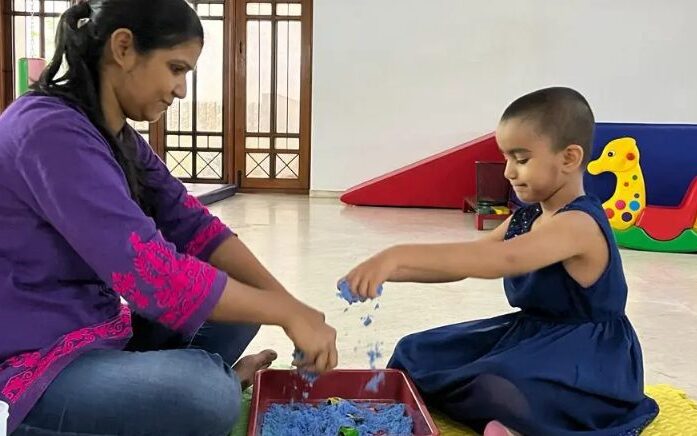
Occupational Therapy session with child

Occupational Therapy is a specialized therapeutic approach that helps children develop the skills they need for daily living, learning, and social interaction.

For children with autism or developmental delays, OT focuses on:

  • Improving fine motor skills such as writing, grasping, and buttoning
  • Enhancing gross motor coordination including balance, posture, and movement
  • Supporting sensory processing
  • Building attention span and task completion
  • Encouraging independence in daily activities

In simple terms, OT helps children participate more effectively in their everyday “occupations,” which for them includes play, learning, and interaction.

Why Occupational Therapy is Important for Children with Autism

Children with autism often experience challenges that are not always visible at first glance. These challenges can affect how they process sensory information, move their bodies, or engage with their environment.

Occupational Therapy helps by:

  • Reducing sensory overload or sensitivity
  • Improving body awareness and coordination
  • Supporting emotional regulation
  • Strengthening the ability to focus and follow instructions

Early intervention is key. The earlier a child begins therapy, the better the outcomes in terms of long-term development.

Signs Your Child May Benefit from OT

Parents often wonder when to seek help. Here are some common signs that a child may benefit from Occupational Therapy:

  • Difficulty holding a pencil or using crayons
  • Avoiding certain textures, sounds, or environments
  • Poor balance or frequent falling
  • Trouble sitting still or paying attention
  • Delays in self-care skills like dressing or eating
  • Difficulty with hand-eye coordination

If you notice one or more of these signs, it may be helpful to consult a professional for an assessment.

What Happens in an OT Session?

At Early Autism Ventures, OT sessions are designed to be engaging, structured, and tailored to each child’s needs.

A typical session may include:

  • Sensory integration activities such as swings, textured materials, or movement exercises
  • Fine motor skill development using tools like beads, puzzles, and writing aids
  • Gross motor activities to improve balance and coordination
  • Task-based learning to build independence
  • Play-based therapy to keep the child motivated and involved

Each session is goal-oriented and continuously adapted based on the child’s progress.

OT Services in Kalyan Nagar: What to Look For

When choosing Occupational Therapy services in Kalyan Nagar, parents should consider the following:

1. Qualified and Experienced Therapists

Ensure that therapists are trained and experienced in working with children on the autism spectrum.

2. Individualized Therapy Plans

Every child is different. Therapy should be tailored to specific developmental needs.

3. Structured and Safe Environment

The therapy space should be child-friendly, safe, and equipped with appropriate tools.

4. Parent Involvement

Regular updates and guidance for parents are essential for consistent progress at home.

5. Holistic Approach

The best outcomes come from integrating OT with other therapies such as speech therapy and behavioral support.

Why Choose Early Autism Ventures in Kalyan Nagar?

Early Autism Ventures offers a comprehensive and child-focused approach to Occupational Therapy.

What sets them apart:

  • Personalized therapy plans based on detailed assessments
  • Experienced professionals specializing in autism intervention
  • A supportive and structured learning environment
  • Integration with other therapies for holistic development
  • Focus on real-life skill building, not just clinical outcomes

The goal is simple. Help every child become more independent, confident, and capable in their daily life.

The Role of Parents in Occupational Therapy

role of parents in occupational therapy

Therapy does not end at the center. Parents play a crucial role in reinforcing progress at home.

Simple ways parents can support their child:

  • Encourage practice of therapy activities at home
  • Maintain a consistent routine
  • Provide a sensory-friendly environment
  • Celebrate small milestones and progress
  • Stay in regular communication with therapists

Consistency between therapy and home makes a significant difference in outcomes.

Final Thoughts

Occupational Therapy is not just about improving skills. It is about enabling children to participate in life with confidence and independence.

For families in Kalyan Nagar, access to the right support can change the trajectory of a child’s development. With the right guidance, structured intervention, and early action, children can overcome challenges and reach their full potential.

If you are exploring Occupational Therapy services, taking the first step today can make all the difference tomorrow.